-
On Fixed Hour Prayer

Breviary from the Micah Center The Mennonite tradition I was raised in did not practice recited prayers. The closest we got were the table prayers (spoken in German, which until the age of five I assumed was the only language God knew). When it was my turn to pray, I could whip through them in record time. In grade school, we also began every day reciting the Lord’s Prayer. But that was it. Had my background been Roman Catholic, Anglican or Orthodox, I would have been familiar with the second spiritual practice of our cohort, called the “Divine Hours”.
What are the Divine Hours?
Simply put, they are written prayers specified for certain times of the day. They’re also known as fixed-hour prayer, “Liturgy of the Hours”, “the daily office” or “keeping the hours”. The fixed times are Lauds (morning), Noonday, Vespers (evening before supper) and Compline (before retiring). The tool of fixed-hour prayers is a “breviary” (prayer book) to follow using set prayers, Psalms, chants and always the Lord’s Prayer. There are many breviaries available, but the cohort had given us one that I decided to use.
American author Phillis Tickle wrote that fixed-hour prayer, along with the Gospel and the Eucharist (communion) is “the oldest surviving form of Christian spirituality. It enables you to pray with the church throughout history and around the world.” She describes a double helix — one strand is the gospel and shared meal and the other the discipline of fixed-hour prayer. Together they’re a chain of golden connection tying Christian to Christ and Christian to Christian across history, geography, and faiths.

Golden DNA strand Joe Stabile taught us that the main purpose of regular prayer is to infuse the sacred into the secular, regularly reminding us of the inherent holiness of God in the present moment. It’s like putting a stick in a spinning wheel, bringing us back to a bigger story.
At first I just prayed at Lauds (morning) and Compline (before bed), but during Lent I took on Noonday and Vespers prayers as well. On days when I was out and about and couldn’t read through the liturgy, I simply let the alarm on my phone momentarily pull me back to God.
Full disclosure, I didn’t always find this practice easy and my responses have ranged all over the map. At their best, the prayers have helped order my day, calling me back to what really matters in life, giving me bumper rails in the bowling lane so to speak. The breviary contains deep prayers and solid theology. I love the poetry. The regularity of it always helped “snap me back” to remembering God in the quotidian details of each day. Both the prayers and the habit have grown on me.
One big plus is that for the first time I think in my life, I have regularly been praying for people (instead of just saying I would and usually forgetting after one day). In the past, I have prayed long sentences of what I think others need. While I’m sure God welcomes it all, it felt relieving to just say names, confident that in the resonant silence, God is listening and filling in the blanks. I entrusted those dear to us to God’s never failing love and care, and as the liturgy beautifully said, “knowing that You will do more for them than we can desire or pray for.”
I have enjoyed actually reading the appointed Psalms, which I haven’t done for years (though many are more violent than I remember). By now I’ve read them all, some several times. I have sung the Lord’s Prayer, sometimes up to 4X/day.
At times, when emotional issues came to a head (such as after a sleepless night), the words were a great comfort and were prayed with heartfelt devotion and intent. I remembered Terry Waite, a Brit who had been unjustly imprisoned from 1987-1991, four years of which in solitary confinement. In his book Taken on Trust, he wrote that the memorized prayers from his own breviary growing up were a godsend. They protected him from being destroyed by the emotions of the catastrophic situation he found himself in. The set prayers gave me this type of structure during some ongoing relational issues.
I also loved many of the actual words of the prayers, which were poetic and “just right”. During Lauds, I was grateful to know I wasn’t the only one in the world pleading for God’s help and assistance first thing in the morning. During Compline, I was grateful to ask God for a peaceful night, “letting our fears of the darkness of the world and of our own lives rest in You.” Every night, I also read Luke 6:27-38, Jesus’ famous sermon about loving our enemies. In total I have read that aloud 84 times! As Joe said, I’ll keep reading it until I live it.
“Are you levitating yet?” joked our pastor Paul the other day. (No. 😄) Though it might seem like I’m earning prayer points, like Safeway Air Miles, anyone who has prayed knows it’s nothing like that. Prayer is much more mysterious.
At their worst, the prayers became rote and boring. To be honest (and this was definitely not all the time), I did not find this spiritual practice easy. It became like a hair-shirt, itchy and bothersome. By the end of Lent, I was all too happy to throw off Noonday and Vespers prayers. Even though I knew I was praying with others all around the world, including my cohort, it was hard to imagine this invisible church. The repetitions got tedious and sometimes I even got a bit pissed off.
Then I got worried. Didn’t I enter the cohort to draw closer to God who I need more than I need to breathe? Where were my fancy intentions now? Were they that feeble to get blown out so easily? Did I proudly bite off more than I could humanly chew? This practice seemed to be calling me out.
I love Joe Stabile’s definition of a spiritual practice as “any act habitually entered into with your whole heart that awakens, deepens, and sustains within you a contemplative experience of the inherent holiness of the present moment.” I had to confess that the “whole heart” part was easier said than done. I’m still such a beginner! Lord have mercy.
The day after I finished this blogpost, Lyle and I did our biweekly shared prayer time. I brought some of the liturgy from Lauds to help us pray for others, and we took turns offering names of loved ones. It’s been a tough couple of months, and by the time we got to the Lord’s Prayer, both of us were in tears and we sat in silence after the Amen. I was so grateful for the prayers which helped us express our hearts more deeply.
Who am I to judge how God has been using fixed-hour prayer to form me? Joe had told us that the Holy Spirit is always there, like a pilot light on a stove, just waiting to be fired up. Even if fixed-hour prayer is not part of my hardwiring, I hope to heck that flame is going to grow brighter this year. Whether I’m beset with worry or grateful and open, I’ll leave those results to God.
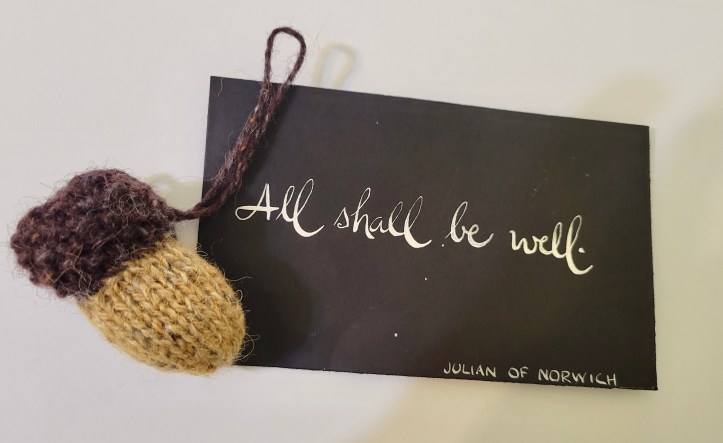
Calligraphy by Lydia, knitted acorn by Linda Tiessen-Wiebe -
Keeping Sabbath
As Cohort #2 approaches, I’ve been reflecting on my experience of the two prayer practices we were given. Since January, I’ve been 1) keeping Sabbath and 2) “praying the hours”. Today’s blogpost will be about Sabbath.
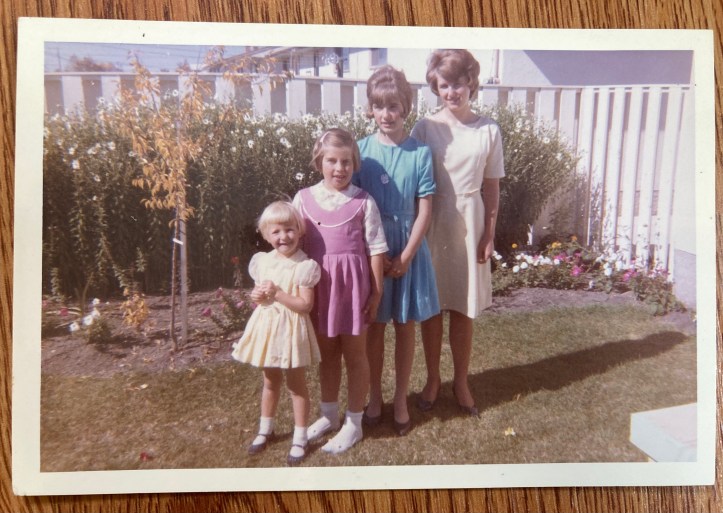
Sawatzky girls in their Sunday best Growing up, my experience of “Sunday” (we didn’t call it Sabbath) was felt as a day of rules that certainly cramped my style. Preparation began the evening before with a bath. Beforehand, I would ride my bike or play hard outside to get good and sweaty to make the bath worth it. Afterwards, with my wet hair crimped into pink rollers, I slept uncomfortably on a terry towel covered pillow. The day itself was a “big deal” as our family of six paraded to church. Sunday School was ok but sitting in church felt unbearably boring. The afternoon at home was like a continuation of church as we had to keep quiet for napping adults. Thankfully we were allowed to watch Disney before we all headed to church again for the evening service. With dread, I imagined that heaven would be an endless Sunday. (Now that I think about it, it’s a wonder I’ve continued going to church all my life!)
Thankfully, faith came alive for me as a teen and so you could say I’ve been “keeping Sabbath” ever since, but practicing it more consciously since January has raised my awareness. Thanks to theologian Walter Brueggemann, I already knew keeping Sabbath is the opposite of being a slave in the Empire, but letting the “rubber hit the road” has challenged my head knowledge.

Richard Foster (author of Celebration of Discipline) famously wrote that the tools of the devil were “muchness and manyness, crowds and hurry”. He wrote that in 1978, and more than 40 years later in 2023, this is more true than ever. We often ask each other, “What are you doing today?” but rarely do we ponder who we are being. Don’t we all crave rest? Joe Stabile said that the antidote to “muchness and manyness” is Sabbath keeping. And it’s not merely a good idea — it’s one of the 10 commandments.
So what exactly does it mean to keep Sabbath?
We learned that the root of the word Sabbath comes from the Hebrew word “Shabbat”. Although it’s frequently translated as “rest” (a noun or verb), another accurate translation is “ceasing [from work]”. It’s to be a day of delight, and should be the best day of our week. It’s a day to feast, play, dance, read, paint, walk, watch…all things we don’t get paid for. Maybe we could even turn off our technology. Sabbath is a day to slow our pace and cease our desire to produce. A day to find our identity outside of what we accomplish
Eugene Peterson taught that “all” we had to do was pray and play — two things we were pretty good at when we were kids! Joe added that Sabbath can be any day of the week, since for the pastors in the cohort, Sunday is a work day.
One thing that was new to me is that Sabbath begins at sundown the night before. Because we are not in control as we sleep, it’s a reminder that God, not us, is in charge of the universe. Barbara Brown Taylor writes that true Sabbath in the Jewish tradition begins when there are three stars in the night sky. I enjoyed beginning my Sabbath with an invitation from these celestial sentinels.
Marva Dawn (author of Keeping the Sabbath Wholly) wrote that “A great benefit of Sabbath keeping is that we learn to let God take care of us — not by becoming passive and lazy, but in the freedom of giving up our feeble attempts to be God in our own lives.”
And so I began to practice. By the time I return to Dallas for Cohort #2 on April 20, I will have observed 12 Sabbaths. Good thing I’m not getting graded on these assignments, because the first thing I began to notice is that I am pretty lousy at pulling it off! As a retiree, I don’t have nearly the “muchness and manyness” on my plate as I used to, but you’d never know it by my often anxious mind and heart. Though I began Sabbath the night before as I “gave up trying to run the universe”, I learned pretty quickly that the slavery of Empire (thinking this world owns me) has a way of shackling me despite my best intentions. Even though sometimes I experienced deep rest, I invariably began to worry that I wasn’t “doing it right”. In the words of an old Jewish prayer, my personal lack of Sabbath Rest was causing me to “walk sightless among miracles”.
I’ve decided that truly letting go of the wheel comes as a gift from God. It’s not something I can pull off myself. All I can bring is my intention. Wherever I’m at on the spectrum between “rest” and “slavery”, I embrace Thomas Merton’s prayer, “I believe the desire to please You does in fact please You.”
I’m still “working at resting”. My Mennonite work ethic is hardwired so it’s been a process, but if Sabbath is about ceasing, I’ve decided to stop worrying about whether I’m doing it right. Maybe I can even quit trying to be holy! (Phew that sentence feels like a relief!) Whether it’s “wasting time” working on a puzzle with Lyle, or just taking a deep breath as I walk, maybe God’s rest will find me despite myself and open my sightless eyes.
And inspired by Barbara Brown Taylor, next Saturday night, I think I’ll name those three stars marking Sabbath: Quit, Hush, and Lydia’s Not God.

Easter art by Lydia -
Learning to Walk in the Dark
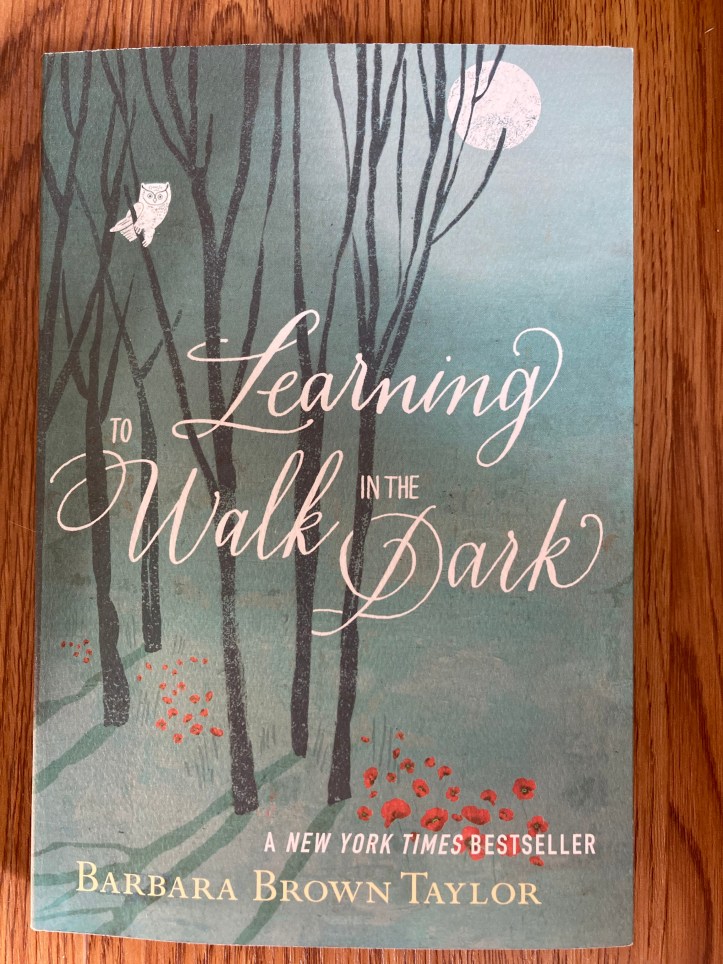
These days I’ve been reading Learning to Walk in the Dark by Barbara Brown Taylor, the assigned book for April’s cohort. I’m aware of the irony in the title as Winnipeg days are getting longer and the glorious sun is beaming into my window, reminding me that spring is near. Still, the recent time change has temporarily darkened the early morning once again, allowing me to light a candle like I did during the pre-solstice mornings of November and December. At least for a short while.
Call me crazy, and maybe it’s the poet in me, but I love the darkness. Candles can be lit. It’s a time for stillness and introversion. For someone who can be quite social (and then exhausted), the solitude feels like a balm. An opportunity to rest from my never-ending hunger for the outer world to tell me I’m ok and maybe even liked. When I first left my teaching job where I talked all the live-long day, the quiet in the dark was a huge relief. I no longer had to break my day up into 45-minute hyper-alert segments, yakking away in what no doubt sounded like a “Charlie Brown teacher voice” to my students.
So when I saw the title of our next book, I smiled. “I’m on board Barbara Brown Taylor! Preach it!”
Taylor wrote about being terrified of the dark as a child, and I scanned my memories. I had no such terror, and still don’t. I didn’t wake up screaming or beg for night-lights. (Were nightlights even a thing in the 60s?) Who’s afraid of the dark? Not me. And yet, a few memories surfaced which called my bravado into question.

The basement of my childhood home had a cold storage room, a “kammer” in German. Like most Mennonite homes of the day, its shelves were lined with home canned fruits and vegetables, even honey, and my mom would often ask me to fetch one for our supper. Though the errand would have taken only a few seconds, that dark, dank room terrified me. It was unlike any other room in the rest of our basement. There was no fun ping-pong table or TV with the latest from Walt Disney in there, no comforting washing machine or dryer, and no light switch. Just rows of cold jars in a room that had an odd smell. And weren’t there centipedes in those corners? Is this what a mausoleum was like, I wondered? I was away from everyone down there, alone. Who was I anyway? Taking the steps two at a time and clutching the jar I’d been sent for, I couldn’t race upstairs fast enough.
Taylor writes about an essay in a book called Let There Be Night. The author, James Bremner, had his version of childhood terror in the darkness when he had to take the family’s empty milk bottles down to the bottom of the driveway for the milkman to swap out in the morning. With no streetlights or porch lights in his Scottish village, it was a journey into the pitch blackness that required all the courage he had. And it never got easier.
Years later, he observed that the bravery it drew out of him stayed for the rest of his life. His voyage into the darkness had prepared him well. All children, he wrote, need a place to practice courage — a “widespread, easily obtained, cheap, renewable source of something scary but not actually dangerous.”
I like that. Reframing the terror I felt in the “scary but not actually dangerous” kammer as an early exercise in courage makes sense. No doubt my courage muscles grew there.

Photo by Frank Loose on Flickr Or maybe they didn’t. Once childhood dissolved into adolescence, I confess I was more of a wimp when the pain of menstrual cramps forced me back into a different kind of basement. I remember sitting on the school stairs and beseeching God. It wasn’t a prayer for Divine help amid my trial, or for wisdom to grow there. It was just one desperate prayer on repeat, “God, take this away.” I wanted to be freed from my suffering, nothing more. A decade later when soon-to-become-chronic headaches began, I lamented my request to God again. What good is darkness? Where was the exit ramp this time? Just give me the happy stuff please.
The great Canadian singer-songwriter Bruce Cockburn has a line I love, “You gotta kick at the darkness till it bleeds daylight.” But at such a young age, I didn’t know a wrestling match was required. Or, an even more absurd thought, that there was treasure to be mined in the dark if only I would take some deep breaths and look around. Taylor confessed the same blindness, “Without benefit of maturity or therapy, I had no way of knowing that the darkness was as much inside me as it was outside me…”.
Taylor writes that “darkness” is shorthand for anything that scares us, and my list is long. There’s the big fears like war, climate change, the suffering of the poor in Winnipeg’s homeless camps…but honestly, the fears that grip me the most are much more local. At the top of my list is unresolved relational conflict (ugh) but there’s also fear of chronic pain, the loneliness of insomnia, the diminishments of aging, loss of purpose or meaning. In my darkest nights, I fear God is absent or even worse has forgotten me, and that my prayers really are just drifting back at me like so many dead leaves.
Like many others in the West, the religion I cut my teeth on reinforced a “joy only” outlook on life. “God is light and in him there is no darkness at all.” (1 John 1:5) Read superficially, these kinds of verses can reinforce the myth that we need to be sunny-side up for God 24/7. At least that was what happened to me. When darkness fell on our family in 1968 with the death of my sister, there was nowhere to lament, so we all fell silent. Though the church no doubt cared in many ways, we weren’t given theological skills for operating in the dark. As a teen, if I was struggling, I thought the only goal was to pray my way out of it asap. As a budding Enneagram 2, I used religion to become a helpful, “good” person. With confidence, I sang “Jesus is the answer…” with my high school friends, happily ignoring the questions that were already growing in the dark. So much bravado. And so ill-equipped for the suffering life hands to us all.
Taylor calls this version of faith “full solar spirituality”. It’s a “kind of spirituality that deals with darkness by denying its existence or at least depriving it of any meaningful attention.”
The faith community I’m part of does not practice “full solar spirituality”. We used to joke that the Good Friday service was our favorite of the year. I’ve always been encouraged to embrace the hard stuff. And yet, I confess I’m still lousy at walking in the dark. My first impulse is to feel around for the nearest light switch and run, or at least distract myself. I get “seize the day” but… “seize the night”?! Who am I kidding? Despite my love of candles in the silent dark, full solar spirituality is more hardwired into me than I once thought.
Taylor writes that there is a light that shines in the darkness which is only visible there. Like the moon, it may wax and wane, but it is always there. As I read her book in the quiet mornings, I pondered the so-called dark emotions I’d rather not have and noticed my tendency to resist them. Fear. Sadness. Shame. Depression. Loneliness. Anger. I’m not usually even aware of them in real time! I notice my tendency to appear “good” (no shadows please), but God (and those closest to me) are not fooled. I’m not the sunbeam I’ve tried to be for so long. Instead of resisting, I’m actually being invited to rest in all that is unresolved in my life. And so I take a breath.
Step 1 of learning to walk in the dark, says Taylor, is to “give up running the show. Next you sign the waiver that allows you to bump into some things that may frighten you at first. Finally you ask darkness to teach you what you need to know.” My old prayer, “God take this away,” simply won’t do anymore. It didn’t help at 13, and it doesn’t at 62 either. I’m being invited to let that prayer go.
As my second cohort approaches, I’ve been practicing just breathing deeply, letting all the unresolved places of my life be. Perhaps “I’m confused”, “I’m angry” or even “I’m despairing” can be a full-sentence prayer in the dark. Maybe between breaths, I can stay curious as I listen for what God will say next. As Thomas Merton prayed, “Therefore I will trust you always though I may seem to be lost and in the shadow of death. I will not fear, for you are ever with me, and you will never leave me to face my perils alone.”
Another memory surfaced as I wrote this blog. I remembered being curious about the jars of honey stored in the dark kammer. Pressing pause on my chronic terror for once, I opened one and dipped my finger in. I closed my eyes in delight as the granular bits of honey slowly melted on my tongue. Returning upstairs with the requested jar of canned goods, I was also armed with new knowledge that the darkness can also hold golden treasure. This time, I walked rather than ran.
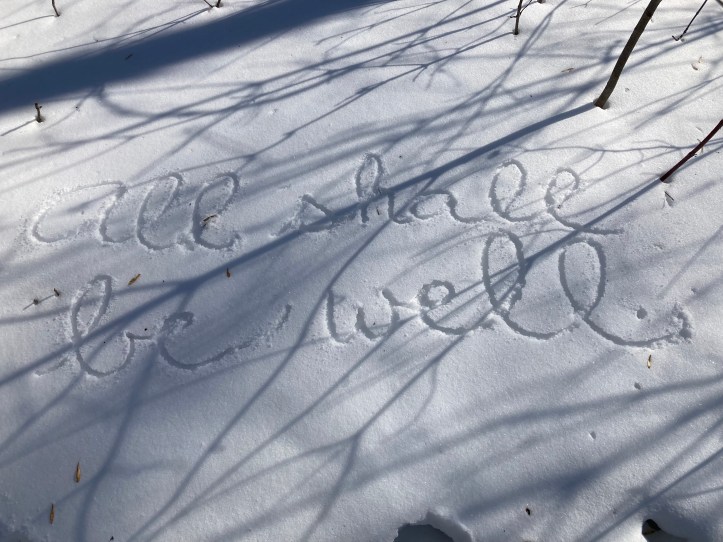
Message amid snowy Winnipeg shadows -
Tornadoes & Snowstorms
Heading out the door to catch my flight to Texas via Toronto on January 25, I got a text message that stopped me in my tracks. Later that day, my Jewish friend Arthur would tell me of a Yiddish saying, “Mann Tracht Un Gott Lacht” — “Man plans and God laughs”, and perhaps there were a few Divine chuckles as I read the text on my phone. “Your flight from Toronto to Dallas has been canceled due to possible tornadoes in Texas.”
But I was undeterred. I’d been anticipating this Contemplative Cohort for months and nothing would stop me. Surely this was a slight hiccup, nothing more. Thankfully, Air Canada rerouted me, but a snowstorm in Toronto derailed (deplaned?) Plan B. Long story short, my “Plan A trip” (12 hours and 2 flights) turned into “Plan D” (30 hours, a hotel in Denver and 3 flights).
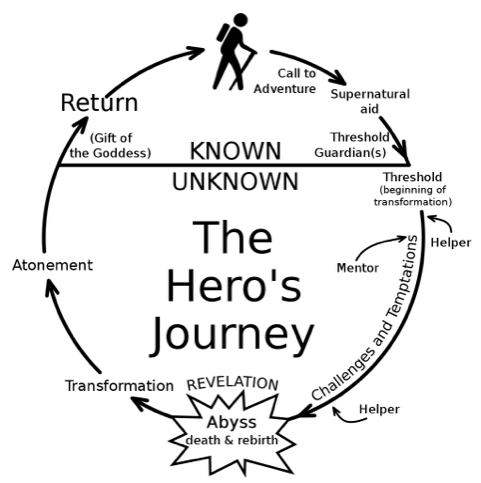
Anyone on an adventure or pilgrimage embarks on something called the “Hero’s Journey” (a template well utilized in many epic novels and movies). Whenever a person hears the call to adventure and crosses from the known to an unknown world, the journey begins. It can happen anywhere, even traveling to a new grocery store. It has 17 stages, but one of the first is called “Threshold Guardian(s)”, which is basically a person or thing that keeps the hero from entering the new world. In other words, it’s an obstacle the hero needs to overcome. It’s even possible for a threshold guardian to turn into an ally. When you’re on an adventure and start to pay attention, it’s amazing to see these guardians reliably show up.
Reading that first text in Winnipeg, I recognized my Guardian. And for most of the day, this dutiful hero overcame. I was ok with it all. I enjoyed the flights (a “retreat in the sky” as writer Pico Iyer describes it), and Air Canada and Lyle were both more than helpful. I was overcoming with seeming ease.
But my “good attitude” finally crumbled during Plan C. The Toronto snowstorm had delayed our departure and I missed my Denver-Dallas connection by mere minutes. I was crestfallen. It was so disorienting and disheartening. I was in a foreign city and had to figure out where to sleep for the night. Hello Plan D. Sitting on an airport bench at 8 pm, this 61 year-old suddenly felt about 10 and I wanted to cry. An intense loneliness set in that neither a phone call from Lyle or prayers seemed to assuage. Not even a talk with the wisest spiritual guide in the world would have helped.

Later in the hotel, sleep eluded me as the Guardian amped things up with mocking, taunting and doubt. Surely, I was making a huge mistake in coming. In a previous blogpost, I’d written about my student Tyler who had groaned, “Why am I here?” and now Tyler’s cry became my own. There was no comfort. Dear reader, perhaps you’ll think I’m being overdramatic when I say it felt like a mercy that my body didn’t just explode. A tiny thought occurred to me that maybe, just maybe, I was wrong, and that 12 hours in the future I’d be ok. That would later prove to be a God-thought but gave no comfort in the moment.
All my life I’ve kind of been a little kid, feeling like the world is just a bit too much for me. I over-depend on mentors and relationships to tell me who I am. That night in Denver, at the outset of my contemplative journey, the Guardian held a mirror to my soul. I had to face that 10-year old and trust she’d be ok, realize she needed healing, and that God was benevolent. No relational fix other than God will do.
I knew this mirror moment was part of my pilgrimage, and that it truly was an obstacle I had to overcome. Despite feeling hollow and alone, I uttered my favorite prayer, “I welcome everything that comes to me in this moment because I know it is for my healing.”
And in the morning, sleepy but body still intact, God winked at me with a synchronicity that made me laugh. Curious about which translation they were using, I picked up the Gideon Bible. It slipped from my hands and literally flipped open to Psalm 5. “Give ear to my words O God; consider my groaning…”. A prayer that both Tyler and I needed.

Enneagram 2s are known for their face of good cheer but when solitude happens (whether by choice or necessity), the relationships that serve as crack cocaine for their need to be loved are gone. Dark feelings can overwhelm and shock them. Psalm 5 assured me I wasn’t alone. God had heard my groans all along, and had seen me in my dark(ish) night of the soul.
And the still small voice I’d heard during the night had been right. I got to see the Rocky Mountains on my way to the airport, and when I arrived to my cohort (miraculously only 1-hour late), I immediately felt at home. I was in fact more than ok. People were friendly at break in welcoming me, they were talking Enneagram, and the Micah Center itself was hospitable with beautiful contemplative art. The content of the afternoon was already rich. And it was spring!
Now that I’d crossed the threshold, would my transformation begin? Why else had I come? The Hero’s Journey tells me there’s more challenges, temptations and even an abyss ahead. Will I make it? As our teacher Joe Stabile said, I really don’t know if I’ll be faithful, but I do know that God is faithful. I’m in good hands.
(Originally published February 4, 2023)

-
Why Am I Here?
When I arrive in Dallas on Thursday, I’ve been pondering what I’ll say to introduce myself. No doubt only three sentences are required, but I’ve been pondering why I’m there. What motivated me to travel over 2000 km as the crow flies (not once but 4X in 2023!) to take part in something I could perhaps have learned from a Ted Talk or a really good book? Why am I here?

The question got me remembering my former student Tyler, a goofy kid whose glasses (when he hadn’t lost them) were forever askew or broken. A constant joker. Let’s just say he was not often aware of the learning agenda I had for him, but you had to like the kid.
Years ago we teachers set up these new learning centers. Riding on the Harry Potter craze, we called them “houses”. Our fancy plan was that each student would meet twice/month in new groups outside their regular classroom, with all ages. (Sounds like the cohort!) Each student’s house would stay the same through the years.
After all our planning, Launch Day finally arrived. Tyler was in the house I was in charge of which met in the music room. As the dust was settling and I was doing roll call, Tyler put his head in his hands and moaned loudly, “Why am I here?” My teacher self probably corrected him, but my inner self laughed and thought, “I hear you Tyler.”
Unlike Tyler, no one has forced this cohort on me, but I’ll still ask his question on Thursday, minus the moaning. 2022 was a difficult year, probably one of the hardest of my life. Going through a hard time can feel like you’re drowning, or like squeezing through the eye of a needle. Focusing on meaning and God (instead of falling off the wagon) is not easy, as many know. A liminal time for sure, and I was surrounded by enormous mercy when God heard my cries in so many ways.
One mercy happened in May when I heard a call to join this cohort. A need to go deeper in my walk with Jesus woke within me. I didn’t say yes right away…my community helped me discern it, but I never heard no. When my inner cheapskate Mennonite protested how impractical and expensive it was, Linda wisely answered, “You know, you should probably pay attention to that inner voice.” I’m so grateful for everyone’s encouragement. Over the months, it became a touchstone that something better was ahead. In a way, the cohort has already paid for itself with the hope it’s provided. As our loving God always does, I was being gently, consistently pulled into the flourishing he wants for us all.
Another layer to the question arose last week. At last Wednesday’s Luke study, I found myself asking the question during my break-out group. Not “why am I in this group” but why are we even here on this earth? I found myself going on about wanting a legacy; an answer to the question of why God has even put me here. I so much want my life to amount to something more than having a good Wordle streak. Paul brought it deeper for me when he talked about the miracle that we’re even here at all. Maybe just living humbly with gratitude for God’s enormous grace could be enough. I breathed easier as my anxious grasping for a legacy loosened.

We remembered an ancient song we learned years ago when Watershed joined our friend Arthur and his family for Passover. Dayenu isHebrew for “it would have been enough.” At least 15 verses long, the song is about being grateful to God for all the gifts given to the Jewish people, such as taking them out of slavery. “If God had brought us out of Egypt, it would have been enough.” Dayenu
Why am I here? I’ll probably keep asking the question, but meanwhile, I’ll practice remembering all the miracles in my life, like when I received a green light during a dark time. It was bright enough to light the way and remind me how deeply our loving God provides for us through every trial.
(Originally published January 24, 2023)
-
Prayer Portals
“As long as you believe that God is only in heaven
Rabbi David Shlomo of Tulczyn (18th century)
and does not fill the earth – let your words be few.
Only when you come to know that you too contain His Presence —
only then can you begin to pray.”What exactly is prayer? My lifelong query has been renewed lately in anticipation of the cohort. Is it our group prayers? Is it in the early morning when words stumble out of a mouth seemingly filled with marbles? Is it when I see the magical rime ice and something in my equally icy heart suddenly melts towards God? Sometimes prayer is palpably real but many times it seems anything but. One thing I know for sure. God has planted in me – in all of us – a desire to pray and be connected to our Creator. To Mystery.

It’s a wonder this desire didn’t get extinguished considering all the non-life giving prayer rituals around me growing up. There was the dreaded Saturday night ritual with the family in the living room – kids, parents, great aunts, grandmother, the whole lot – kneeling on the rug, each taking our turn at prayer starting with the youngest (me). Oh the agony that ensued. It seemed the older you were, the more words the Almighty needed, and by the time we got to the oldest, Tante Greta, my spirit had withered within. They meant well but…did God really need to hear all those words? Wouldn’t God have been much happier to see me playing outside instead of feeling like scratching my eyes out? Relief came only with the last Amen.
Then there were the mealtime rhyming prayers in German. I could say those in record speed (just ask me), but they were followed by a long prayer from my dad which had to include gratitude for the entire plan of salvation, as we drooled impatiently over the waiting supper. Prayers from the pulpit didn’t offer much consolation either as they sounded more like entries in a yelling competition. God seemed remote up in “heaven”, far above those wooden ceiling slats I counted to bide the time in church.
Jesus didn’t seem to have this problem. Like our “Welcoming Prayer”, Jesus embraced everything that came in each moment. Jesus knew how to make even the “boring” temple rituals come alive. Rohr writes that Jesus was the first nondual religious teacher of the West, meaning he was both/and — coming to earth both as a full human, while also never losing connection to his divine Source. His nondual mind/heart knew that everything belongs, entrusting even his eventual murder into his Father’s loving care.
Rohr thinks that over the history of Christianity, we lost that sense of connection to God in the “no-matter-whatness” of life. “People were so thrilled with the great ‘I AM’ in Jesus (his divinity) that we forgot to balance it with his more strongly proclaimed humanity.” Jesus only ever called himself ben’ adam, a son of the human one (no formal caps). Our problem, says Rohr, is that we’ve tried to understand his teaching with a dualistic mind. Jesus might have been both human and divine but surely not us, and so He became only divine and human beings only human. We lost an understanding of ourselves as divinely beloved as Jesus was.
This explains the “up-in-heaven” place I (and many others) mistakenly imagined God to be. I confess that for much of my life I’ve thought of myself as a mere human, desperately trying to become “spiritual”. Rohr says that “the Christian revelation was precisely that we are already spiritual (‘in God’)”. Our difficult but necessary task is to learn how to become human.
For me, becoming human means becoming aware of my humanness and opening to just being a beloved daughter of God, “warts and all” in what Rohr calls the “naked now”. Joe Stabile, leader of the coming cohort, said it well. “A spiritual practice is any act habitually entered into with your whole heart that awakens, deepens, and sustains within you a contemplative experience of the inherent holiness of the present moment.”
It’s a miracle that God has a way of finding us anyways and waking our hearts despite our fumbles.

Yesterday I thought back to another ritual I had as a kid. Remember those envelopes with see-through windows? When those came in the mail, I would hold the discarded envelope against a wall, and whisper into those windows. What was I saying? I have no clue, but it did feel sacred. I remember the yearning in my heart; the hope that just maybe, Someone was listening. Maybe those Saturday night prayers weren’t so bad after all if they’d given me a nudge towards God. Aren’t we all just stumbling through this life, hoping for prayer portals, as my parents had? Aren’t we all just yearning for Someone to listen?
Recently I received another “prayer window”. My house church Watershed has a tradition to pray over someone about to embark on a journey. And this past Sunday it was my turn to receive the blessing. Our homily had been about Jesus’ baptism, and my friend Cal introduced the prayer.
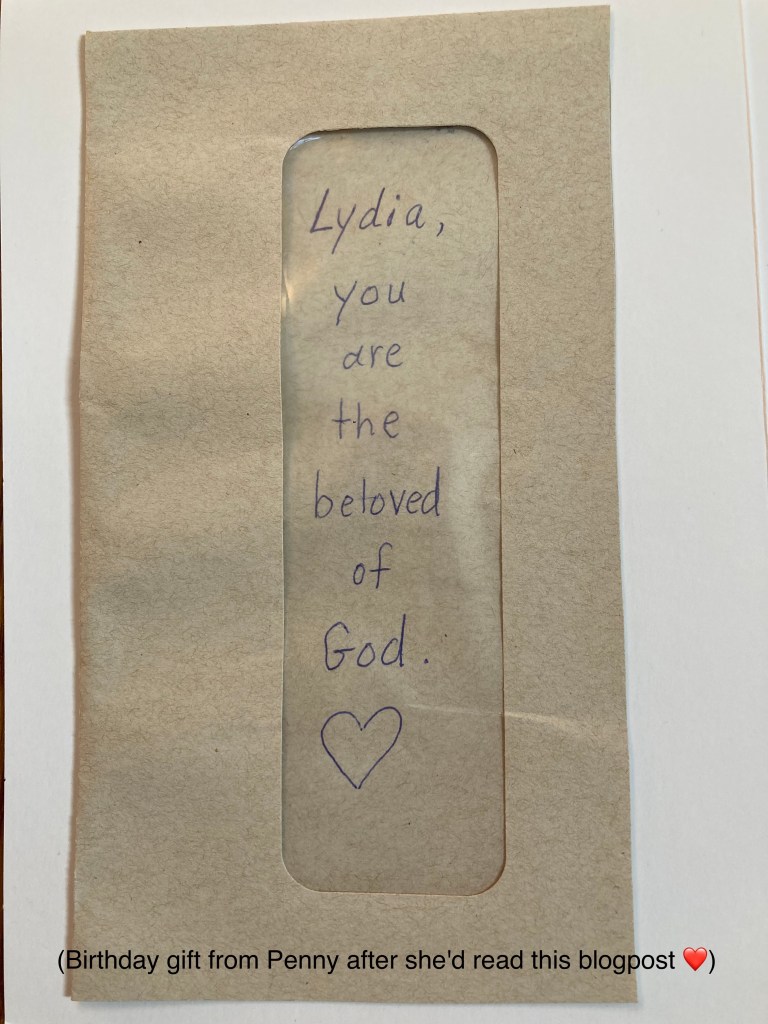
“Lydia, as you journey to Dallas, our prayer for your trip is a baptism. And I hope that the whole experience becomes a way for you to understand your belovedness. Enneagram 2s have a hard time knowing they’re beloved. That’s one of the things they have to struggle with. They don’t believe it. The Contemplative Cohort is really learning that you are beloved. You will touch so many people, including us, with that joy; that Good News that we’re all beloved.”
And so, just as I had long ago during my Saturday prayer ritual as a kid, and even though it felt kind of goofy, I knelt on the rug. Only this time I wasn’t squirming to get away. Everyone laid their hands on me, and I was gifted this prayer.
“God, our hands are on our beloved sister Lydia. We pray that Your Spirit goes with her. That she deepens in her knowledge of Your love for her, and that the gifts she brings back from that experience becomes a joy and a gift.”
What a gift. The prayer ran palpably through everyone’s hands into my heart, like a wave. I’m so grateful that Someone is listening. No doubt Someone was listening all along
(Originally published January 17, 2023)
-
How Martha Becomes Mary
“Only one thing is necessary.” (Jesus to Martha in Luke 10:42)
I’ve always felt busted by the Mary/Martha story. As a sensing, practical person, I’m not a natural contemplative like Mary who Jesus says has “chosen the better way” when she sits at his feet, soaking in his teaching. Yes, Martha’s gifts of hospitality and attention to detail were needed and valued, but Jesus noticed she was anxious and distracted about the million things on her to-do list.
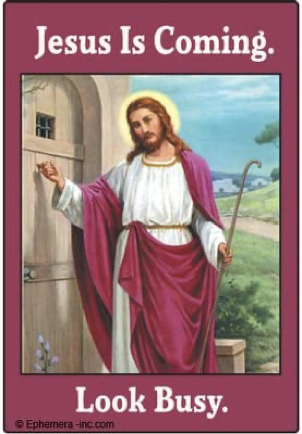
I get her. She’s in my DNA. It’s not so much the hands-on temperament that’s the problem. It’s the monkey mind takeover that I really identify with. Even as I scribbled away at this very blogpost, I wondered why I felt so anxious despite the meaningful content. Then I realized. It’s the million things. Maybe it’s the coming cohort, maybe it’s the January “resolution” feeling, maybe it’s just human nature, but I often slip into that “look busy” modality. Honestly, I approach pretty much everything like Martha, including my spiritual practices, trying to accomplish many things.
Who am I kidding? I’m no Mary.
How exactly will this Martha become Mary? Will my pilgrimage to Dallas help me in this lifelong fight between action and contemplation?
Rohr says that becoming Mary is not easy for any of us. Our minds by nature are intent on judging, controlling, fixing and analyzing instead of just loving God like Mary did. We do this because it’s easier. It’s the ego that is interested in control. But reality (aka the naked now) never really gets fixed. It’s far too messy for starters. We can’t love reality and God with the judgmental mind.
It’s not that Jesus was asking Martha to turn off her common sense and stop doing things. He was pointing to something deeper. There was a fundamental yes she was being invited to. When we say “no” to reality in our judgments, we usually get some form of no back. The Apostle Paul said, speaking of Jesus, “With him the answer is always ‘Yes!’” (2 Corinthians 1:19) If we start with yes, like Jesus always did, Rohr says we are more likely to get a yes back.
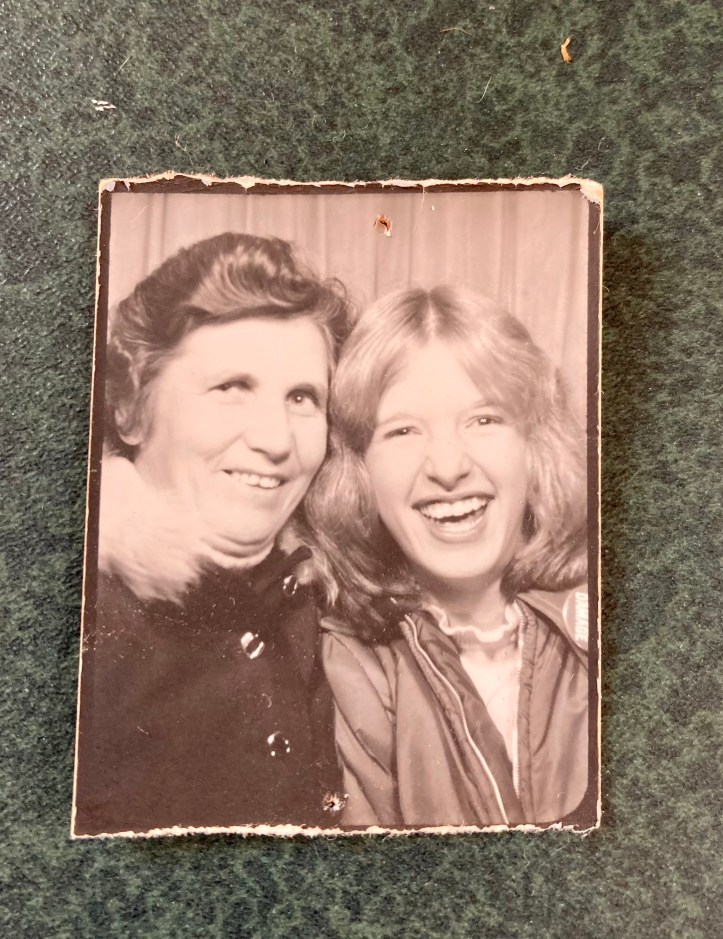
An early memory came to me this week which helped me flesh all this out — a time when I first said no then yes. When I was 16, my mom, bless her, got me my first job as a cashier at our local corner store, Wiebe’s J-Mart. I loved it. I was good at bagging groceries just right, giving correct change back (thank you mental math), and privately making tallies of the most popular cigarettes (because, why not).
But one day, I forgot to get someone to sign their cheque. It was a large amount, over $100. The store owners were livid! If I didn’t find the person and get them to sign their cheque, it would come out of my pay. At only a few hours/week, this would take forever. Cue the shame. I still remember how my legs turned to rubber and I wanted the earth to swallow me. When my shift ended, I went to the park at the end of our street and bawled for hours. What kind of a person would forget such a thing? There had been no address on the cheque and now the solution seemed out of my grasp. I was distracted and anxious.
But something came over me…a certain calm that Jesus was with me there in that park and that things would be ok. I felt consoled. Like Mary, I felt like I could have sat there forever. Finally I got up and went home to sleep, gathered strength the next day and knocked on several doors in the area until I found the owner of the cheque. The problem was resolved and it hadn’t even taken long.
This was a good example to me of how my initial firm no (all my hysterics) dissolved into a yes when it dawned on me that Jesus was there. Looking back, this would become a template for many similar situations to come in my life — where my end-of-the-rope no’s mercifully melted into Jesus’ yes.
What does it mean to love reality; or rather, to love God in our reality, and to let God love us? Rohr says, “Just try to keep your heart open, your mind without division or resistance, and your body not somewhere else. Once your presence is right, you grow from everything, even the problematic.”
Jesus was fully present like this. Most of the people were looking for religion, but he was just a human being, prayerfully living in full reality. Like Jesus, we have to simply willingly (as opposed to willfully) pass through some rings of fire. Yes, not no. It’s called the way of the cross. We can’t get there by trying harder. Jesus called it the “narrow path that few would walk upon.”
Maybe all Mary was doing was resting in “Yes”. Like teenage me in the park so long ago, she knew Jesus was there with her, and that all would be well. Maybe I can stop judging my inner Martha and let Mary…and Jesus…befriend her.
January 9, 2023
-
Contemplation
In the center of this silence is a thought I’d like to keep
When I step out in the crowd, when I’m swimming in the deep.
This thought is not of “peace” nor is it bluebells breezing free.
It’s standing in the center storm and knowing I am me.
– by Lydia age 28
Despite being an extrovert, all my life I’ve been drawn to silence. I’ve had a desire to know who “me” is, even in the center storm. No doubt this desire came out of a radical feeling of being lost to myself – the flip side of the silence. When I left teaching in 2014 and discovered Julian of Norwich, I learned the word “contemplative”. My meditation room became a “cell” a bit like she had (though not so extreme). It’s no surprise that a Contemplative Cohort would be a draw.
But…what exactly does it mean to be a “Contemplative” or a “mystic”? Are my feet going to start lifting off the ground from sheer holiness when I return from Dallas? Cue the angel choirs! As I’ve shared news of my Dallas pilgrimage, the last thing I want is to make it sound like I’m going to get all spiritual or holier-than-thou. This creates a them/me dichotomy that isn’t true. More than anything, I just want to become more human; more who I was created to be.
Joe Stabile says that contemplative practices are “anything that draws you closer to God”. I like that. It can be formal like Centering Prayer or prep for Bible study, or it can be informal like walking, swimming, making bread, tending bees, puzzling, arranging flowers… Defined that way, everything can be a contemplative practice, even breathing. Like yeast in bread, the fruits of the Spirit such as peace and love expand our hearts, and we become more human.

As a kid, I loved riding my banana bike along the hill near our place. It was a space all on my own, and my imagination felt free and content there. I imagined I was pulling a train of (very low-maintenance) children behind me. My spirit felt unbounded and the child who felt invisible at home suddenly felt wanted and seen. Years later as an adult, reading Greg Boyd’s book on spiritual practices, I was invited me to imagine a place from childhood as somewhere to “be with Jesus”, and a spot on this hill is one I’ve often returned to in prayer.
The subtitle of Rohr’s book is “Learning to See As the Mystics See”. This challenge might sound heady and not for ordinary folk, but Rohr says, “Don’t let the word ‘mystic’ scare you off.” A mystic is simply someone who has moved from mere belief systems to actual inner experience of God, like I had as a kid on my bike.

A contemplative or mystic sees with the third-eye. To explain, he describes three ways to view a sunset. The first is what most of us do, use our senses to just enjoy the event in itself — the immense physical beauty. It’s a good way. The next way is through the second eye as we make sense of the universe. We might wonder how the planets cycle to make the sun visible. This way of seeing is even better.
The third way of seeing a sunset is first to enjoy the first and second ways, but then to also contemplate the mystery of it all. Watching the sunset, we are before “an underlying mystery, coherence, and spaciousness”that connects us with everything else. This is the best way. Third-eye seeing is the way the mystics see. We become open and nonresistant to God who was there all along (even behind the couch!). We become anything but “holier-than-thou” as it makes us humble, compassionate, and knowing that we don’t know.
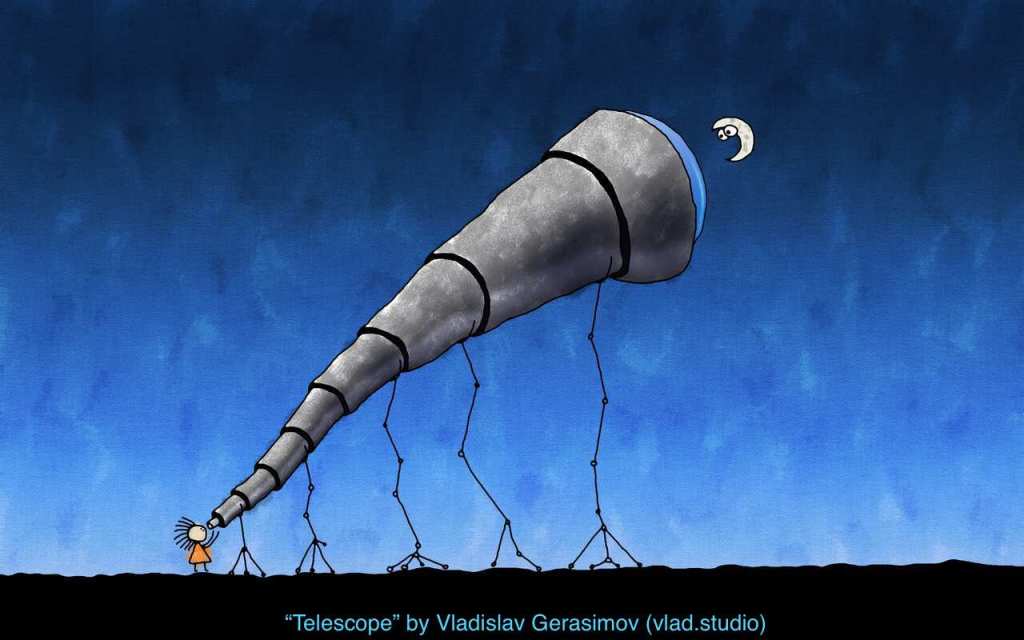
I usually forget about my third-eye. Most of us do. Lacking the contemplative gaze, we end up seeing holy things faintly, trying to understand great things with a whittled-down mind, and trying to love God with our own small and divided heart. I love Rohr’s example, “It’s like trying to view the galaxies with a $5 pair of binoculars”.
Rohr defines contemplation as larger seeing; “full-access knowing”.And prayer is an umbrella word for any interior journeys or practices that allow you to experience faith, hope and love within yourself. It’s not technique for getting things, or a pious exercise that somehow makes God happy.
As the cohort comes closer, I’ve reflected on my own contemplative practices, both formal and informal. For decades, I’ve done an early morning “quiet time”, reading a devotional, praying and sometimes journaling. Most often, I’m staring out the window at the birds, aware of how difficult it is to feel even a remote connection to God. Thoughts, feelings, persons, situations and conditions all seem to be the main drama.
I’m slowly learning to let go of worries of “not connecting”. Like the sun, God is there whether I’m aware or not. Be not anxious, says Jesus. Merton said we’re more like an apple ripening on a tree in its good time.
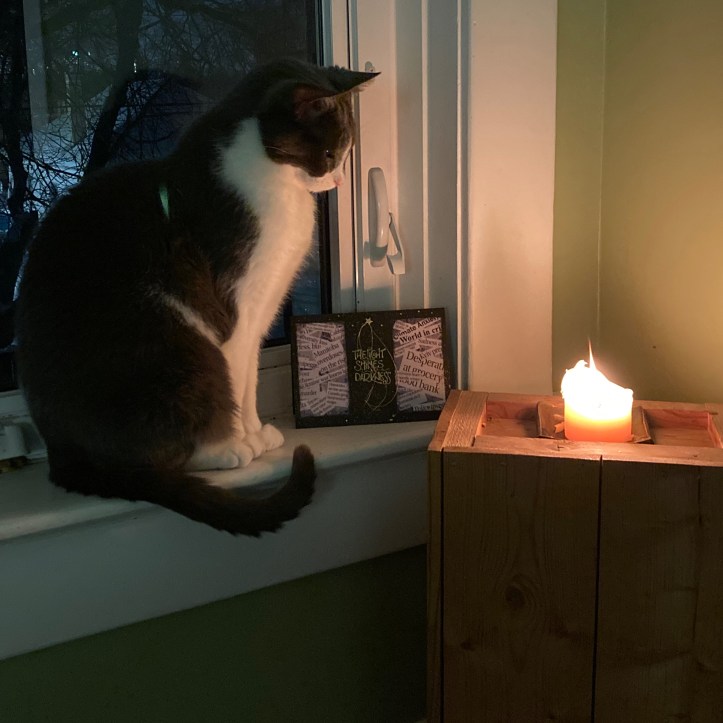
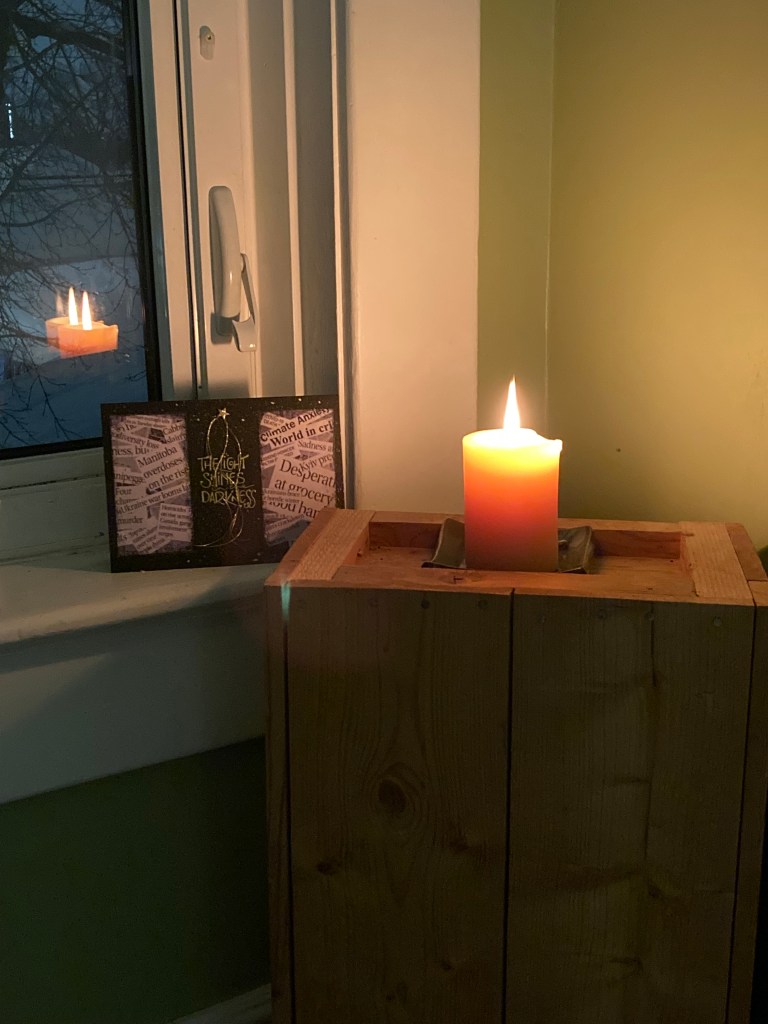
Lately during the dark mornings of Advent, simply gazing at a candle has been a gift in opening that third-eye and drawing me back to Mystery. Rohr says in prayer, we merely keep returning the divine gaze and we become its reflection, almost in spite of ourselves. “Everything exposed to the light itself becomes light,” says Ephesians 5:14, so God is doing the work. It’s a relationship, not an idea. We are all standing under the same waterfall of God’s mercy, warts and all, and when we’re ready, we’ll become aware of it.
Here’s to us all becoming mystics, simply drawing closer to God even in the center storm. Like that kid riding her banana bike so long ago, maybe it’s easier than we think.
-
Step 1 – Preparing for my cohort
In less than a month, I’ll be in Dallas, Texas for the first session of my Contemplative Cohort, a year-long course offered by “Life in the Trinity Ministry”. My first assignment has been to read Richard Rohr’s 2009 book The Naked Now: Learning to See as the Mystics See. I’ve read it once already, and like a good (and nervous) student, I’m planning on reading it again, so I’m going to send out a series of summaries and reflections on the themes of the book.
As many of you know, I heard the call to go to this cohort while Lyle and I were at Lester Beach in August. It was a difficult week emotionally for us both, but listening to Suzanne Stabile’s retreat was like hope in the eye of the needle. Snooping on the website, I learned about their cohorts and felt a big inner “YES” that was hard to ignore. What was I to make of this? Was this just a geographical escape; an “I gotta get the hell out of Dodge” moment? I wanted to dismiss it as an impractical, ridiculous idea, but once I shared my green light moment, I’ve heard only “yes” from others during my discernment. I applied and eventually was accepted into the Contemplative Cohort, run by Joe Stabile and Hunter Mobley. Starting in January, I’ll go to Dallas 4X in 2023. Thanks to Lyle my travel agent, the first ticket is already booked.
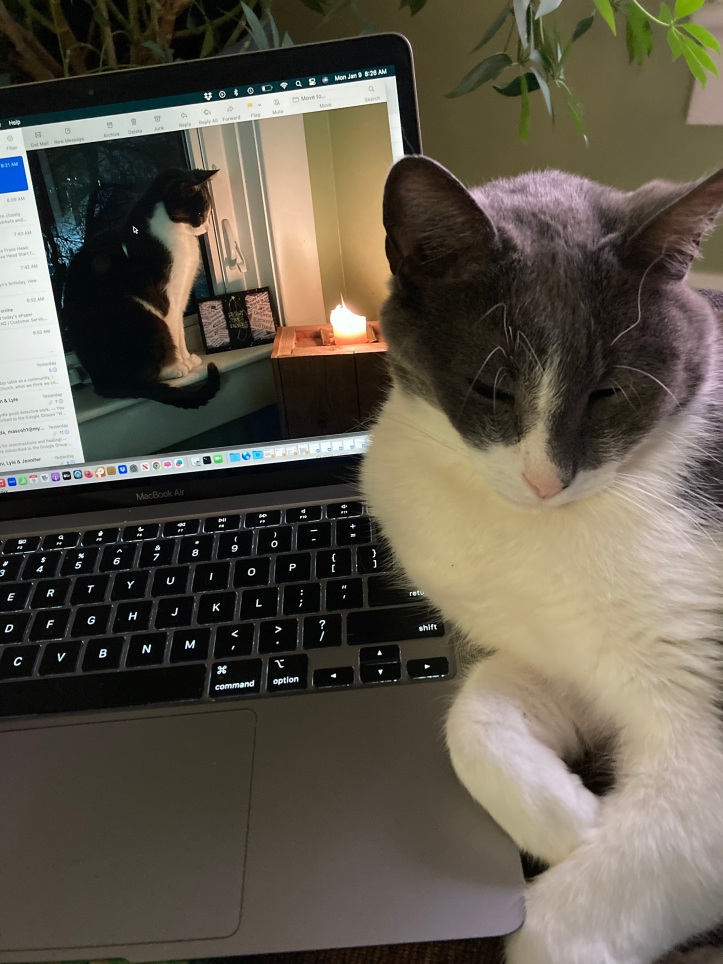
As I’ve been reading Rohr’s book in the early, dark moments of each morning, Earl has been sleeping on my lap. He symbolizes who I hope to become — resting in God, trusting that “all is well” and that I don’t need to do a thing because it’s already true. Earl is like the mystics Rohr writes about, but it’s sure not who I usually am! Relational conflicts leave me in a tired, emotional, tangled, messy heap. I am usually anything but restful as I anxiously seek and twist to find my birthright in God.
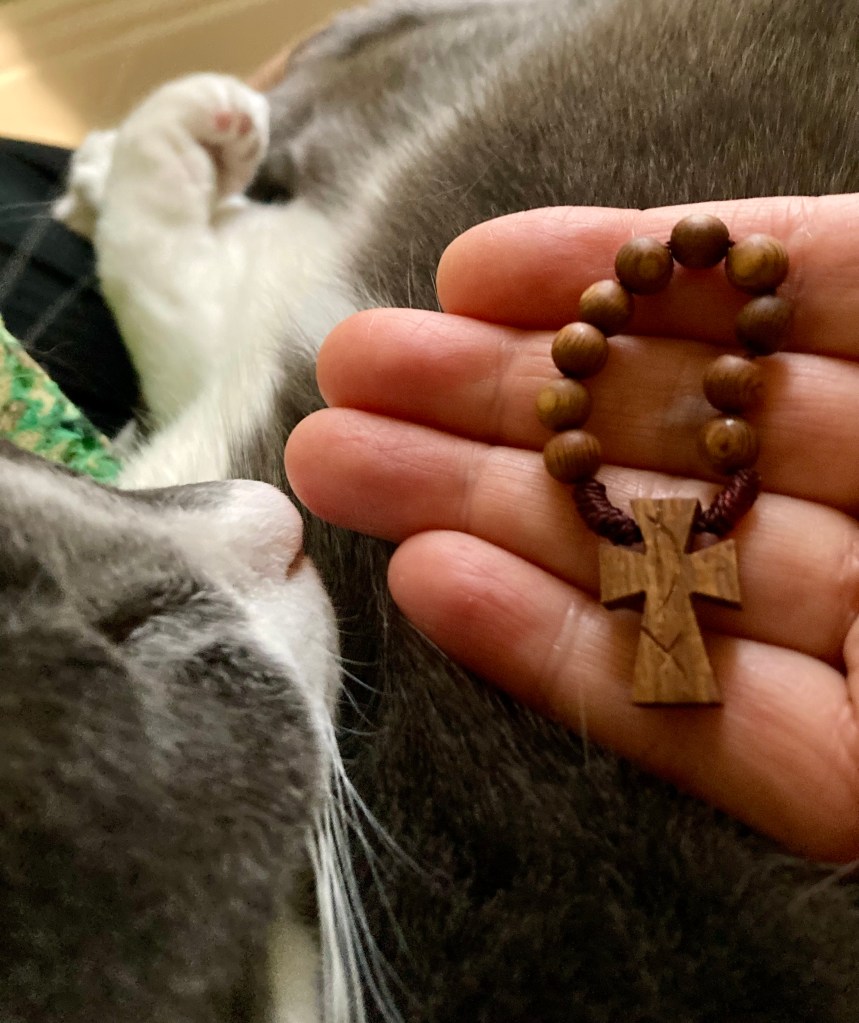
But Rohr suggests maybe I’m already like Earl; that the gift of my birthright has already been given to me. True spirituality is not a search for perfection or control or the door to the next world. It’s a “search for divine union now.” It’s about waking up to God’s presence, already given to me in the “naked now”, in every sacred, present and even messy moment.
Earl’s contemplative rest on my lap redirects me every morning, and yet I barely dare to hope. Could it be true? It sure doesn’t seem true as the shadows tempt me to cynicism and hopelessness. I usually forget about God in the fear and distraction and uncertainty of life. I usually try to whistle in the dark, look the other way, just keep busy, or as Jesus put it, “build bigger barns”.
But Rohr points me to Jesus, who found God here on earth in disorder and imperfection, and told us that we must do the same or we’ll never be content. Instead of working hard at it (my hardwiring), I’m invited to “joyfully surrender to God”. “When you can be present”, writes Rohr, “you will know the Real Presence”. He promises this is true, and it’s almost that simple.
He writes that mature transcendence is an actual falling into God, which is “both an abyss and an utter foundation.” Paradoxically, the prayers of both Mary at the Annunciation (so full of promise) and Jesus in Garden of Gethsemene (so full of anguish) find a place. This is a paradox for sure, but Rohr says that in God, these prayers are not opposites. Everything belongs. Rather than finding anything, Rohr says it feels much more like Someone finds you. “You find yourself having been grabbed, and being Someone’s beloved.”
This is the hope and desire that has kept me grounded in the past weeks and months. I don’t remember all the details when my struggles are the darkest. Like a kid, all I remember is, “I’m going to Dallas.” Though I haven’t yet set foot in the airport, the pilgrimage has already begun. The thought of it has given me hope and purpose, something to hang onto during the darkest nights. I’ve been caught between desire for union with God and the mysterious question, “Where is this going to take me?” I already feel like Someone is grabbing me and carrying me into a better future, fashioning God’s purposes in my struggles.
And so, at 61, I’m the learner again, exercising intellectual humility in my lost state. The struggles of 2022 have shown me I need to plug into something larger. In some weird kind of parallel universe, this will be my way of entering our community’s current study of Luke. Earl the mystic will show me the way.

3 responses to “Step 1 – Preparing for my cohort”
-
Awesome Lyds. Love how your furry friends have become part of the journey and the inspiration towards solitude. I will definitely be following.
LikeLike
-
Beautiful Lyds. Looking forward to your posts.
LikeLike
-
Looking forward to your thoughts and experiences finding there way to print. Thanks for sharing
LikeLike
-


-
Subscribe
Subscribed
Have a WordPress.com account? Log in now.


Leave a comment