As Cohort #2 approaches, I’ve been reflecting on my experience of the two prayer practices we were given. Since January, I’ve been 1) keeping Sabbath and 2) “praying the hours”. Today’s blogpost will be about Sabbath.
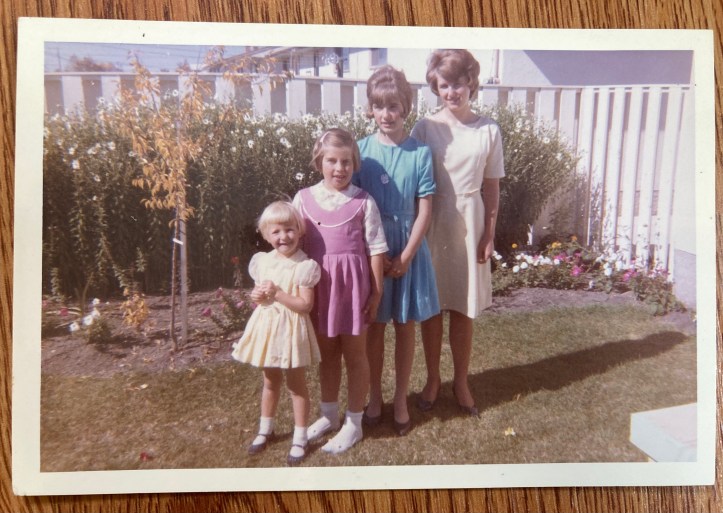
Growing up, my experience of “Sunday” (we didn’t call it Sabbath) was felt as a day of rules that certainly cramped my style. Preparation began the evening before with a bath. Beforehand, I would ride my bike or play hard outside to get good and sweaty to make the bath worth it. Afterwards, with my wet hair crimped into pink rollers, I slept uncomfortably on a terry towel covered pillow. The day itself was a “big deal” as our family of six paraded to church. Sunday School was ok but sitting in church felt unbearably boring. The afternoon at home was like a continuation of church as we had to keep quiet for napping adults. Thankfully we were allowed to watch Disney before we all headed to church again for the evening service. With dread, I imagined that heaven would be an endless Sunday. (Now that I think about it, it’s a wonder I’ve continued going to church all my life!)
Thankfully, faith came alive for me as a teen and so you could say I’ve been “keeping Sabbath” ever since, but practicing it more consciously since January has raised my awareness. Thanks to theologian Walter Brueggemann, I already knew keeping Sabbath is the opposite of being a slave in the Empire, but letting the “rubber hit the road” has challenged my head knowledge.

Richard Foster (author of Celebration of Discipline) famously wrote that the tools of the devil were “muchness and manyness, crowds and hurry”. He wrote that in 1978, and more than 40 years later in 2023, this is more true than ever. We often ask each other, “What are you doing today?” but rarely do we ponder who we are being. Don’t we all crave rest? Joe Stabile said that the antidote to “muchness and manyness” is Sabbath keeping. And it’s not merely a good idea — it’s one of the 10 commandments.
So what exactly does it mean to keep Sabbath?
We learned that the root of the word Sabbath comes from the Hebrew word “Shabbat”. Although it’s frequently translated as “rest” (a noun or verb), another accurate translation is “ceasing [from work]”. It’s to be a day of delight, and should be the best day of our week. It’s a day to feast, play, dance, read, paint, walk, watch…all things we don’t get paid for. Maybe we could even turn off our technology. Sabbath is a day to slow our pace and cease our desire to produce. A day to find our identity outside of what we accomplish
Eugene Peterson taught that “all” we had to do was pray and play — two things we were pretty good at when we were kids! Joe added that Sabbath can be any day of the week, since for the pastors in the cohort, Sunday is a work day.
One thing that was new to me is that Sabbath begins at sundown the night before. Because we are not in control as we sleep, it’s a reminder that God, not us, is in charge of the universe. Barbara Brown Taylor writes that true Sabbath in the Jewish tradition begins when there are three stars in the night sky. I enjoyed beginning my Sabbath with an invitation from these celestial sentinels.
Marva Dawn (author of Keeping the Sabbath Wholly) wrote that “A great benefit of Sabbath keeping is that we learn to let God take care of us — not by becoming passive and lazy, but in the freedom of giving up our feeble attempts to be God in our own lives.”
And so I began to practice. By the time I return to Dallas for Cohort #2 on April 20, I will have observed 12 Sabbaths. Good thing I’m not getting graded on these assignments, because the first thing I began to notice is that I am pretty lousy at pulling it off! As a retiree, I don’t have nearly the “muchness and manyness” on my plate as I used to, but you’d never know it by my often anxious mind and heart. Though I began Sabbath the night before as I “gave up trying to run the universe”, I learned pretty quickly that the slavery of Empire (thinking this world owns me) has a way of shackling me despite my best intentions. Even though sometimes I experienced deep rest, I invariably began to worry that I wasn’t “doing it right”. In the words of an old Jewish prayer, my personal lack of Sabbath Rest was causing me to “walk sightless among miracles”.
I’ve decided that truly letting go of the wheel comes as a gift from God. It’s not something I can pull off myself. All I can bring is my intention. Wherever I’m at on the spectrum between “rest” and “slavery”, I embrace Thomas Merton’s prayer, “I believe the desire to please You does in fact please You.”
I’m still “working at resting”. My Mennonite work ethic is hardwired so it’s been a process, but if Sabbath is about ceasing, I’ve decided to stop worrying about whether I’m doing it right. Maybe I can even quit trying to be holy! (Phew that sentence feels like a relief!) Whether it’s “wasting time” working on a puzzle with Lyle, or just taking a deep breath as I walk, maybe God’s rest will find me despite myself and open my sightless eyes.
And inspired by Barbara Brown Taylor, next Saturday night, I think I’ll name those three stars marking Sabbath: Quit, Hush, and Lydia’s Not God.

 The Contemplative Blogger
Good reminder that learning to rest is a gift from God. Thanks for this Lyds.
LikeLike
I too definitely consider myself a reluctant Sabbath observer even though the core of my being desires nothing more than to rest in God and learn the art of play again. Thanks Lyds for this. Love the Richard Foster quote 🥰
LikeLike
Thanks for your reflections, Lydia. The reading and practice you are engaging with are important for all of us. I love the picture of the four sisters (I would have been jealous as I always wanted one:)
LikeLike